
What is rhytidectomy (facelift) and what is it for?
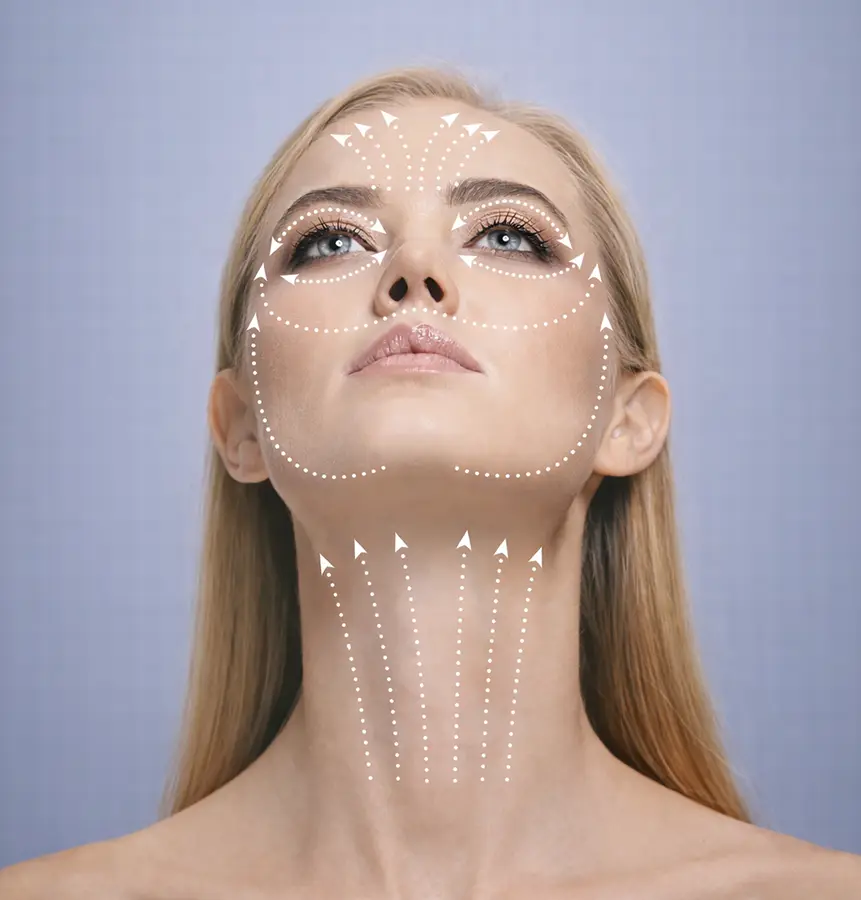
Rhytidectomy, also known as a facelift, is a surgical procedure designed to improve the visible signs of aging in the face and neck. Its main objective is to correct sagging by repositioning deep tissues, redefining contours and strategically removing excess skin.
This procedure does not seek to “tighten” the face artificially. When performed with proper technique, the result is a fresher, more rested and natural look, respecting your facial identity.
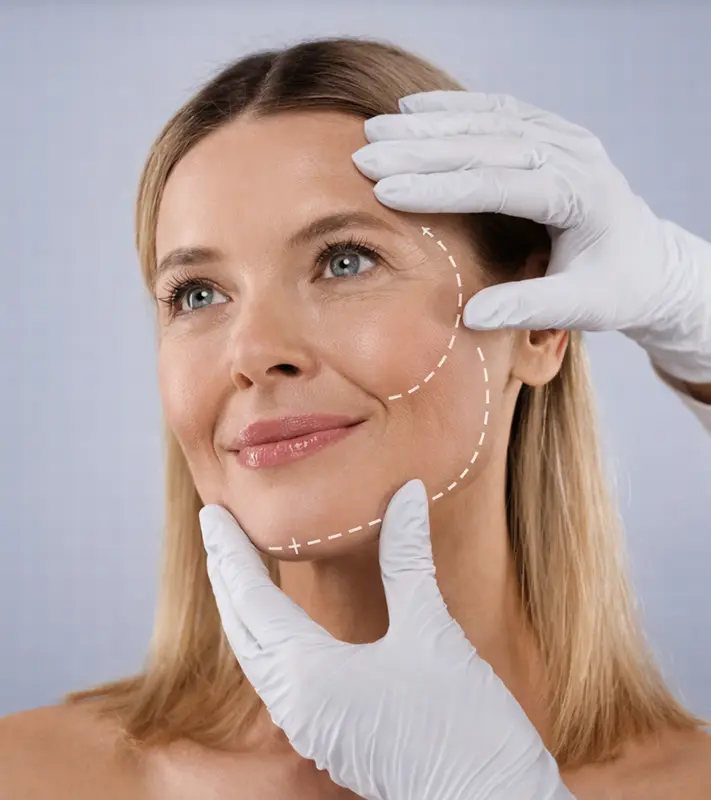

What does and does not rhytidectomy do?
What it does achieve: reposition deep structures, improve flaccidity, redefine contours and achieve a comprehensive rejuvenation of the face and neck.
- What it does achieve: reposition deep structures, improve flaccidity, redefine contours and achieve a comprehensive rejuvenation of the face and neck.
- What it does not do: it does not by itself eliminate fine surface wrinkles or stop aging. In selected cases, it can be complemented with skin treatments or other facial procedures for a more comprehensive result.
Each benefit depends on proper medical evaluation and individualized surgical planning.
How is a facelift performed?
The surgery is performed through strategic incisions that allow hiding scars in natural folds and hairline. The objective is to reposition tissues, improve support and remove excess skin in a precise manner.
Duration, anesthesia and stay
The duration is usually 2 to 5 hours, depending on the areas treated and if combined with other procedures. It can be performed with general anesthesia or advanced sedation with anesthetic monitoring, according to medical assessment.
Depending on the extent, it may be ambulatory or require an overnight observation. The priority is always clinical safety.
Frequent combinations
Benefits of a surgical procedure for Facelift
Rhytidectomy can offer both aesthetic and functional benefits, including:
Results and expectations
The changes begin to show as the swelling goes down and continue to refine over the next few months. The goal is a face that looks firmer and more defined, with a natural result.
Rhytidectomy does not stop aging, but it usually offers visible and long-lasting rejuvenation, initiating a new facial “baseline”.
Facial surgery requires deep anatomical knowledge and precise technique. The choice of a board-certified plastic surgeon, The preoperative evaluation and follow-up are essential to reduce risks and achieve a safe esthetic result.

Your Facelift in Cancun
Traveling to Cancun for your surgery combines Dr. Sámano's medical excellence with the convenience of a world-class destination.
Actual results of Facelift surgeries
Before and after of real patients treated at CPSC. Images documented under medical criteria, advanced techniques and professional follow-up, with focus on safety, body proportion and natural results.
Types of scars
The incisions are strategically placed around the ear and hairline, taking advantage of natural creases so that the scars are discreet. With proper surgical technique and postoperative care, they usually become inconspicuous over time.
Scars
high
They form when there is excessive collagen production during healing. They remain above the level of the surrounding skin but usually flatten over time.
Scars
hypertrophic
Thick, raised and often reddish in the first few months. Unlike keloids, they remain within the edges of the original incision and improve significantly over time.
Scars
keloids
Result from excessive scarring that extends beyond the wound area. They have a strong genetic component and require special attention during recovery.
Scars
widened
These scars are usually flat and smooth to the touch, but appear stretched or wider than desired. This usually occurs when there is too much tension on the skin during the closure or healing process.
Scars
Hyper /
Hypopigmented
This refers to scars that heal with a different tone than your natural skin tone. They can be hyperpigmented (darker than the surrounding skin) or hypopigmented (lighter or whiter).
Healing varies from patient to patient and depends on skin type and aftercare. At CPSC, we provide close follow-up and specific recommendations to achieve the best possible result. Specialized treatments are available to help make scars less visible. In addition, sun protection during the first year is key.
Recovery Schedule - Facelift (Rhytidectomy)
Recovery is progressive. Temporary swelling and bruising are normal. Following postoperative indications reduces risks and improves the final result.
Frequently Asked Questions about Facelift (Rhytidectomy)
Clear answers on safety, recovery and candidacy for your facelift
Rhytidectomy, also known as facelift, is a surgical procedure designed to correct sagging of the face and neck by repositioning deep tissues, reshaping the skin and removing excess skin, achieving a natural facial rejuvenation.
There is no fixed chronological age, as aging depends on genetics and lifestyle. Generally, it is ideal for patients between 40 and 80 years old who present loss of jaw definition, neck flaccidity or very marked nasolabial folds.
No. When rhytidectomy is performed with proper technique, the goal is to restore facial firmness and contours without altering expression. The result should be natural, harmonious and consistent with the patient's individual anatomy and features.
Most of our patients describe recovery as a feeling of tightness or numbness rather than acute pain. Thanks to our minimally invasive techniques and advanced analgesic management, discomfort is mild and perfectly manageable during the first postoperative days.
Ideal candidates are people who present facial or cervical flaccidity, have good skin elasticity, have a defined bone structure and are in good general health, always after a personalized and complete medical evaluation.
The incisions are strategically placed around the ear and hairline, taking advantage of natural creases so that the scars are discreet. With proper surgical technique and postoperative care, they usually become inconspicuous over time.
Although a rhytidectomy can “turn back the clock” by ten to fifteen years, the natural aging process will continue to run its course. However, the repositioned facial structure will always look younger and firmer than it would have if the procedure had never been performed.
It is extremely common and recommended to combine rhytidectomy with a blepharoplasty to rejuvenate the look or a fat transfer to restore lost volumes. Performing these procedures simultaneously optimizes operating room time, logistical costs and offers a much more comprehensive aesthetic result.
Initial recovery usually allows a return to daily activities within 7 to 14 days, depending on individual evolution. Residual inflammation and the healing process continue to improve progressively over the following months.

