
Table of Contents
LLiposuction is the most performed plastic surgery procedure in the world according to ISAPS. However, the success of the results does not depend solely on the surgeon's skill: adherence to the postoperative protocol is equally determining. This guide details what to expect at each stage of liposuction recovery, which symptoms are normal, and which require immediate medical attention.
What happens in the body during liposuction?
Liposuction is a surgical technique that removes localized fat deposits using a cannula connected to a suction system. Depending on the technique used—tumescent, ultrasonic (VASER), laser, or high-definition (4D liposculpture)—the recovery process may have minor variations, but in general it follows a predictable pattern.
During the procedure, the subcutaneous tissue experiences controlled trauma: small blood vessels break, connective tissue is mobilized, and a natural inflammatory response is generated. This inflammation, known as edema, is responsible for a large part of the symptoms in the first few weeks: swelling, firmness to the touch, skin sensitivity, and an appearance that may initially disappoint the patient who was expecting to see immediate results.

Preoperative Marking - Abdominal Liposuction - Plastic Surgery
Pre-liposuction marking: surgical precision to define body contour before the procedure.
It is fundamental to understand that postoperative edema does not represent the final result. The body needs time for the tissue to reorganize, the lymphatic vessels to recover, and the skin to retract over the new contours. This process, in its entirety, takes between four and six months.
The first 24 hours: what you need to know
In the immediate post-liposuction period, the patient remains under observation at the medical facility. During this time, vital signs, pain level, the drainage of tumescent solution—the anesthetic and vasoconstrictor fluid injected before extraction—and the patient's general condition are monitored.
It is normal to observe yellowish or slightly pinkish fluid output through the incisions during the first 12 to 24 hours. This corresponds to residual tumescent solution and should not alarm the patient. Liposuction incisions are small—typically 3 to 5 millimeters—and are intentionally kept open for the first few hours to facilitate this drainage.
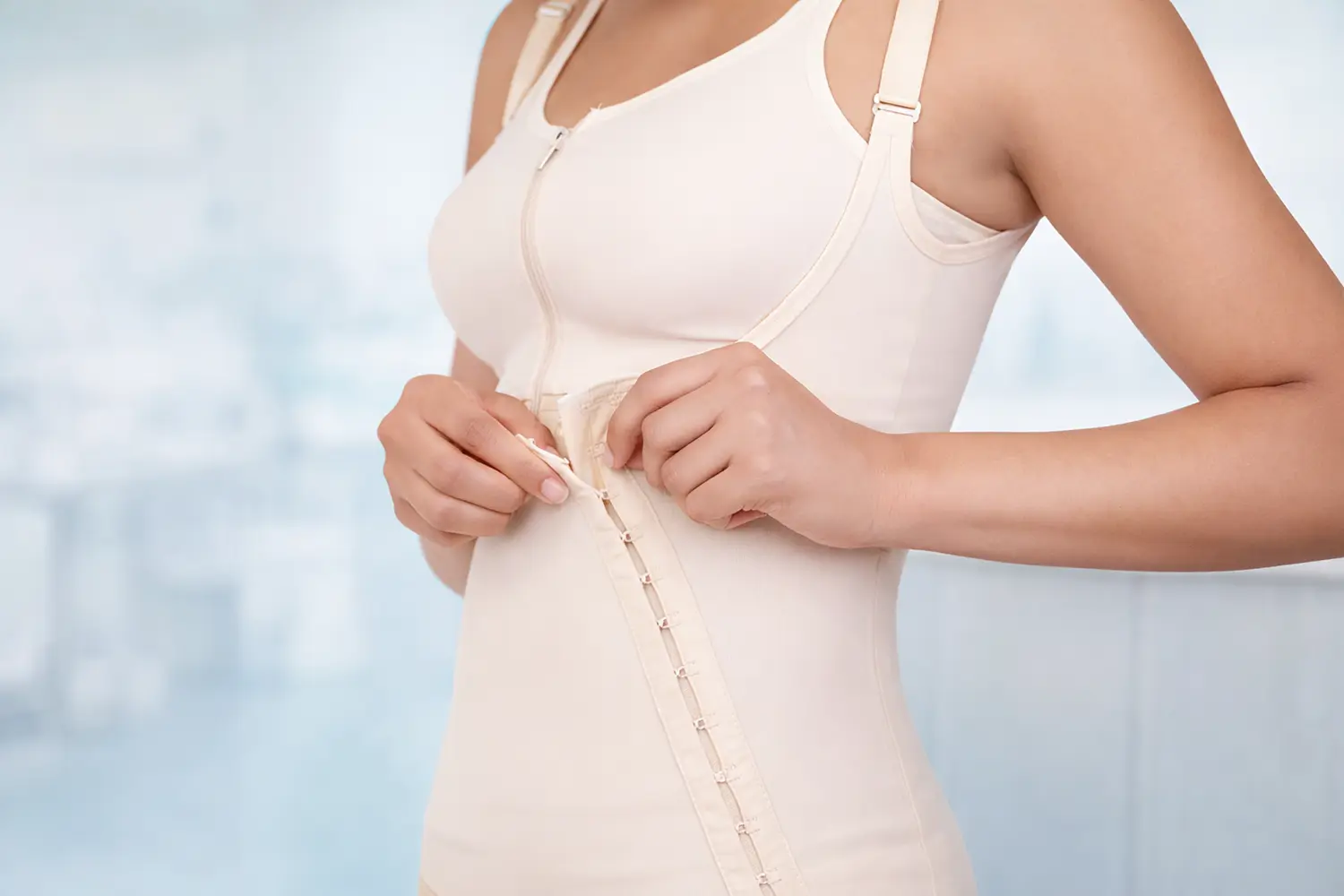
The compression garment is placed in the operating room before the patient wakes up. Its function is to reduce swelling, support the operated tissue, and help the skin adapt to the new contours. It should not be removed without medical indication.
3. Week 1: Active rest and edema control
The first week is the most intense in terms of symptoms. Edema generally peaks between the third and fifth day. The patient may feel that the operated area is more swollen than the day after surgery, which is completely normal and expected.
The pain, which is generally described as intense muscle soreness similar to that of excessive physical exertion, is managed with oral pain relievers prescribed by the surgeon. Anti-inflammatory drugs such as ibuprofen or naproxen should not be taken unless explicitly medically indicated, as they can interfere with clotting.
During this week, rest is fundamental, but it doesn't mean complete immobility. Doctors recommend getting up to walk briefly every two to three hours to stimulate circulation and reduce the risk of deep vein thrombosis. Strenuous efforts, aerobic exercise, and any activity that raises abdominal pressure should be avoided.
Manual lymphatic drainage massages, performed by a certified physical therapist, can be started on the second or third day as indicated by the surgeon. They are one of the most effective complements for accelerating edema reabsorption and improving the final quality of the outcome.
2 and 3. Week 2 and 3: progressive return to activity
For the second week, most patients feel well enough to resume low-demand daily activities: office work, short trips, light household chores. Swelling begins to reduce noticeably, although stiffness and skin sensitivity remain.

before-after-tummy-tuck-results-body-contouring
Abdominal liposuction results: reduction of localized fat and a more naturally defined silhouette.
It is common at this stage for the patient to notice irregularities in the skin or areas that are firmer to the touch. This corresponds to temporary scar fibrosis that occurs in the subcutaneous tissue and usually resolves with time and drainage massages. It is not a complication.
The compression garment remains mandatory 24 hours a day for the first four to six weeks, according to the surgeon's protocol. In week three, some patients may transition to wearing it only during the day, but only with explicit medical authorization.
5. Week 4: Partial Results and Moderate Physical Activity
By the fourth week, the change is noticeable. The superficial swelling has significantly reduced, and the patient can appreciate the contours of the result for the first time. However, deep swelling—the kind that occurs in the deeper tissues—is still present and will continue to resolve in the following months.
At this stage, with the surgeon's authorization, it is generally possible to resume low and medium intensity physical activity: long walks, stationary cycling, gentle swimming. Intense abdominal exercises, heavy weights, and contact sports should be avoided for at least eight weeks from the date of surgery.
Sun exposure should be avoided on scars for at least three to six months, as ultraviolet radiation can permanently hyperpigment them. If exposed to the sun, incisions should be covered or sunscreen with SPF 50 or higher should be applied.
6. Months 2 and 3: Consolidation of Results
Between the second and third month, the tissue continues to reorganize. The skin begins to retract and progressively adapt to the new volumes. Areas that still showed firmness or irregularity are smoothing out. Drainage massages, if performed regularly, noticeably speed up this process.
During this period, most patients have resumed their full exercise routine, including strength training and high-intensity aerobic exercise. The only precaution that is maintained is sun protection on the scars.
This is also the time when some patients begin to worry if they see that the results are not perfectly symmetrical or if small irregularities remain. In most cases, these perceptions resolve on their own as tissue maturation progresses. Follow-up consultations with the surgeon are the appropriate setting to assess if any adjustments are required.
7. Weeks 4 to 6: definitive results
It is within this timeframe that liposuction results can be considered definitive. Deep swelling has resolved entirely, the skin has completed its retraction process, and the scars have matured to their final state—generally, small, barely perceptible whitish lines.
The results of liposuction are permanent in the sense that the extracted fat cells do not regenerate. However, the remaining fat cells in the treated areas can increase in size if the patient gains significant weight. Therefore, maintaining a stable long-term weight is crucial for preserving the results.
8. Warning signs: when to call the doctor
While liposuction recovery follows a predictable pattern, there are symptoms that require immediate medical attention: fever above 100.4°F (38°C) that does not respond to pain relievers, intense redness or excessive heat in the operated area (a possible sign of infection), active bleeding from the incisions, sudden sharp pain, difficulty breathing or chest pain (possible signs of pulmonary embolism), and severe swelling that rapidly spreads asymmetrically.
In the event of any of these symptoms, the patient should immediately contact their surgeon or go to the emergency room. In medical tourism, it is especially important to have the emergency contact information for the medical center readily available at all times during the recovery period at the destination.
9. Frequently Asked Questions
When can I return to work after liposuction?
If the job is office-based or has low physical demand, most patients can return between the fifth and seventh day. For physically demanding jobs, it is recommended to wait between two and four weeks with the surgeon's authorization.
Does liposuction remove cellulite?
No. Liposuction removes deep subcutaneous fat but does not treat cellulite, which is an alteration of the superficial connective tissue structure. For cellulite, there are specific treatments such as radiofrequency, carboxytherapy, or subcision.
When can I fly back to my country?
Surgeons generally authorize flying between the fifth and tenth day, depending on the extent of the procedure and the flight time. You should always consult with your doctor before booking your return flight.
Does the result remain if I don't exercise?
The fat cells that are removed do not come back. However, if there is significant weight gain, the remaining cells in the treated area can enlarge. Maintaining an active lifestyle and a balanced diet helps to maintain long-term results.
Are massages mandatory or optional?
They are highly recommended. Manual lymphatic drainage shortens recovery time, reduces edema more quickly, and improves the quality of the final result. Although technically optional, most surgeons include them in their standard postoperative protocol.
Understanding the recovery process before undergoing liposuction is an essential part of making an informed and responsible decision.

